Real Estate Client Welcome Packet: Make It Trackable
A client welcome packet is the one document a buyer or seller keeps open for the length of a deal: the process, your documents, and the tools they need. Sent as a PDF it goes dark on delivery. Sent as a hosted page with a per-client link, opens, document clicks and calculator runs come back to you.
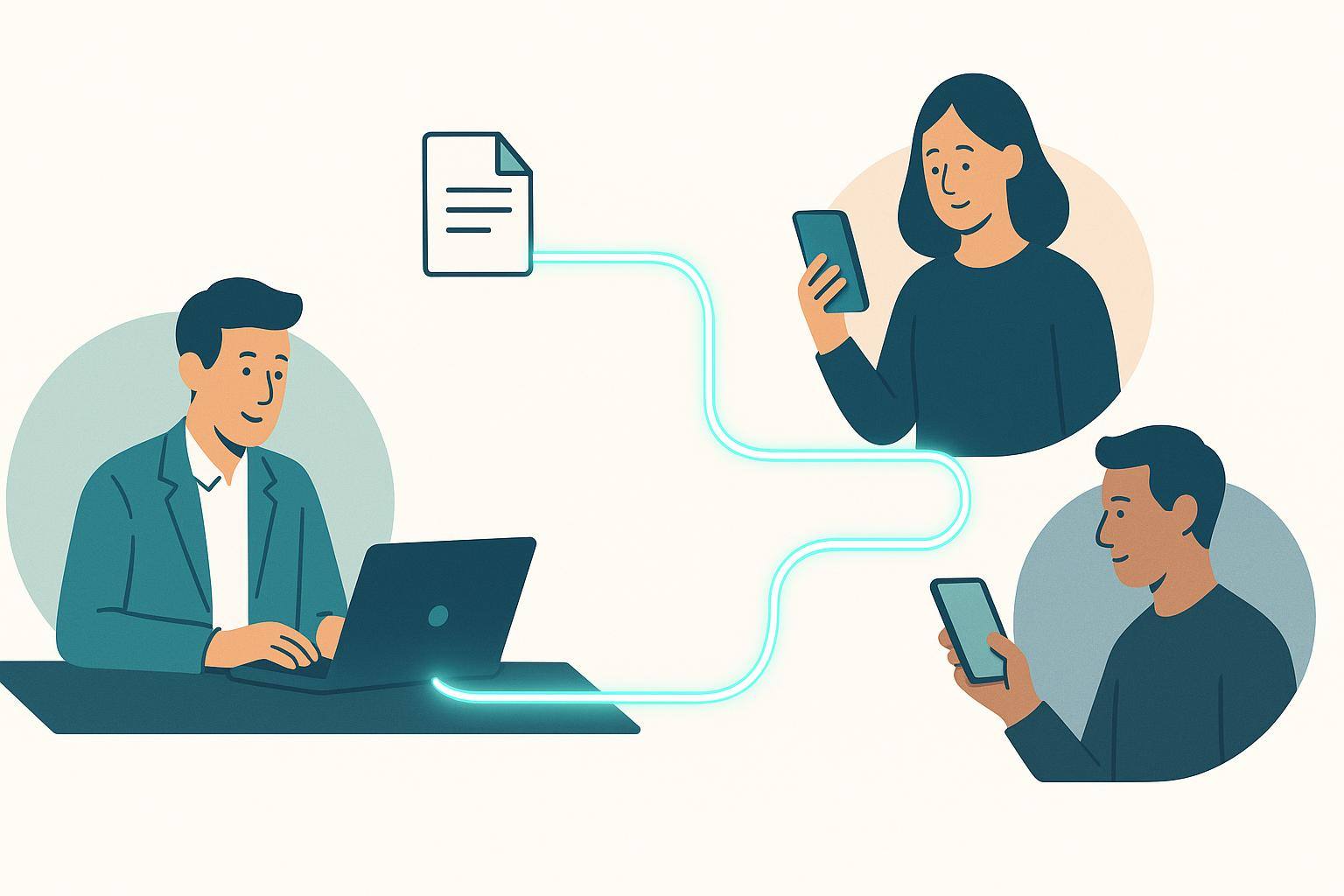
A buyer spends nine minutes in a mortgage calculator on a Tuesday night, pricing houses sixty thousand dollars above the budget she gave you on Saturday. If that calculator lives inside a PDF you emailed her, you will never know it happened.
That is the quiet problem with the real estate client welcome packet as most agents send it. The content is usually good — agents buy well-designed templates, fill them in carefully, send them at the right moment. Then the document leaves and nothing comes back. Here is what belongs in one, and how to build a version that keeps working after delivery.
What belongs in a client welcome packet
A welcome packet earns its place by removing questions the client would otherwise text you at 9pm. Six blocks cover almost all of it — same shape for buyers and sellers, different contents.
| Block | Buyer packet | Seller packet |
|---|---|---|
| A personal opening | One paragraph, in your voice, naming them | Same — the part that dates the relationship |
| The road ahead | Pre-approval → touring → offers → inspection → close | Pricing → prep → go live → offers → close |
| Your documents | Buyer agreement, inspection checklist, lender sheet | Net sheet, disclosure pack, prep and staging guide |
| A tool they will actually use | Payment math they can change themselves | Equity and pricing context, always labelled an estimate |
| Your contact card | Savable to their phone in one tap | Same |
| A hand-off ask | "Know someone else buying?" | "Know someone else thinking about selling?" |
The tool row is where most packets get thin. A roadmap is reassuring but static; a calculator gets opened repeatedly, at night, by both people in a couple. If you already publish branded report pages, those belong in the packet as cards, not in a separate email nobody remembers. The documents row is the other one worth doing properly — there are more ways to get documents to a client through Follow Up Boss than most agents use.
Why the PDF version goes dark
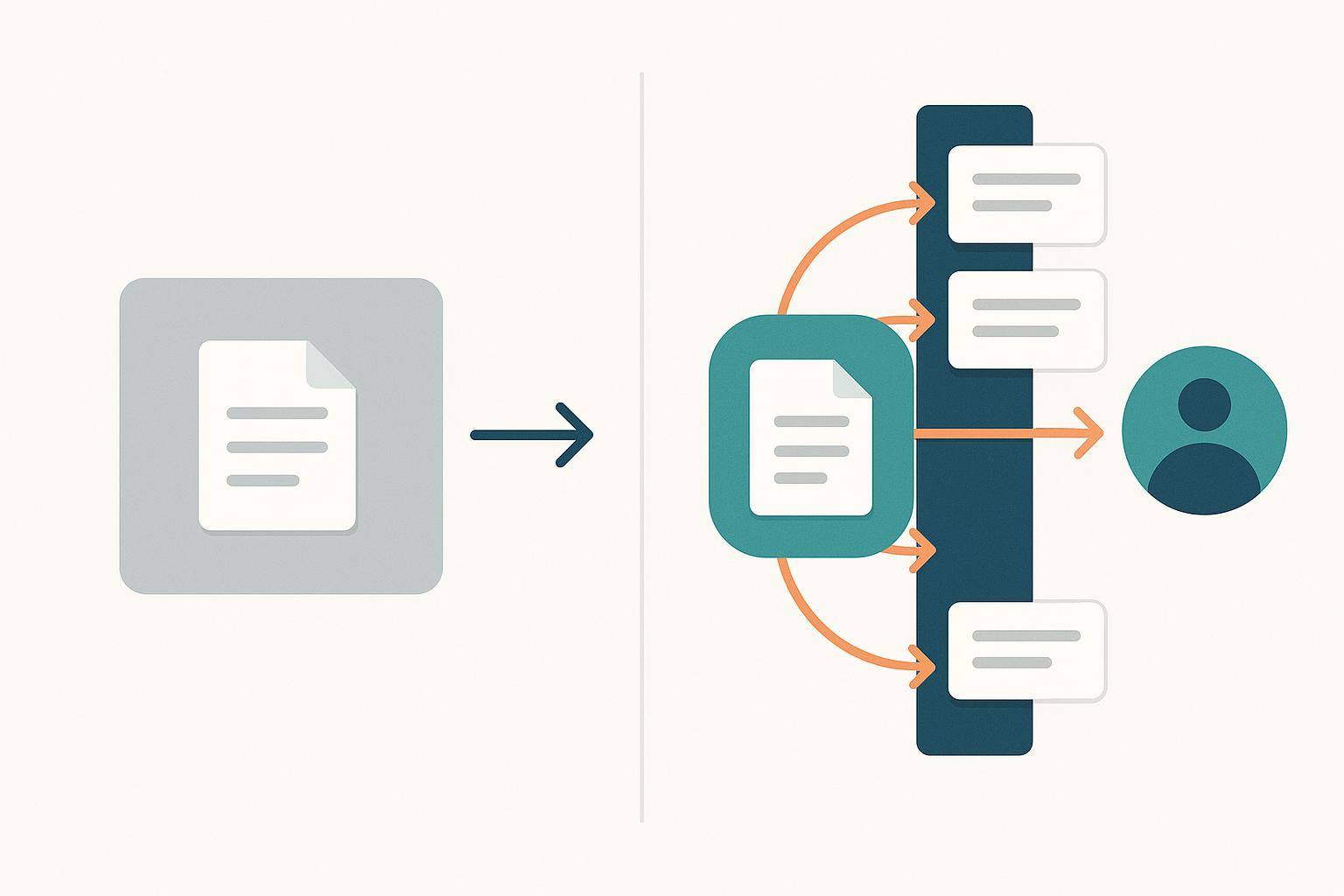
Three things break the moment you attach a file.
It stops reporting. You cannot tell whether it was opened once, opened eleven times, or filed unread. A client's behaviour in the first two weeks is some of the best signal you will get about how serious they are, and the PDF discards all of it.
It stops being true. Rates move, your net sheet changes, the inspector you recommend retires. A document you cannot edit after sending is one slowly going wrong on somebody's desktop.
It has nowhere to go. When your seller wants to hand the packet to their sister, who is also thinking about listing, the best they can do is forward an old email. You hear about the sister eight months later, if at all.
The referral is the part everyone leaves on the table
Look at where the business comes from. In the National Association of REALTORS® 2025 Profile of Home Buyers and Sellers, 37% of sellers were referred by a friend, neighbour or relative and another 29% used an agent they had worked with before — 66% arriving through a relationship rather than a search. On the buyer side, 43% came through a referral. And 91% of buyers say they would use their agent again or recommend them; 62% say they already have (BAM's summary of the NAR report).
Read the last two together. Nearly everyone would recommend you; roughly a third never has. That gap is not enthusiasm — it is that recommending you means composing something from scratch at the moment a friend mentions moving.
The research here is encouraging, and worth stating precisely rather than hyping. Tracking about 10,000 bank customers over three years, Schmitt, Skiera and Van den Bulte found referred customers at least 16% more valuable, with better retention, than matched non-referred ones (Referral Programs and Customer Value, Journal of Marketing). Gershon and colleagues later found referred customers go on to make 31–57% more referrals themselves (Referral Contagion, Journal of Marketing Research).
Now the part that cuts the other way, because you should hear it from us rather than from a comment section: a 2015 replication by Armelini, Barrot and Becker confirmed that referrals reduce churn but, in their words, "do not find that referred customers are necessarily more valuable" — attributing much of the effect to demographic similarity between the two people (International Journal of Research in Marketing). None of it is about real estate. Treat it as a reason to make referring easy, not as a promised multiple.
The systematic version of this — segmenting past clients, timing the outreach, working the anniversary — is building a referral pipeline in Follow Up Boss. The packet is the small version of the same idea: put the ask where the client already is.
What a hosted packet does that a file cannot
This is the thinking behind Client Packets, which we shipped inside Follow Up Ace on 8 August 2026: a branded page built for one named client, at its own link, that you keep editing after you send it.
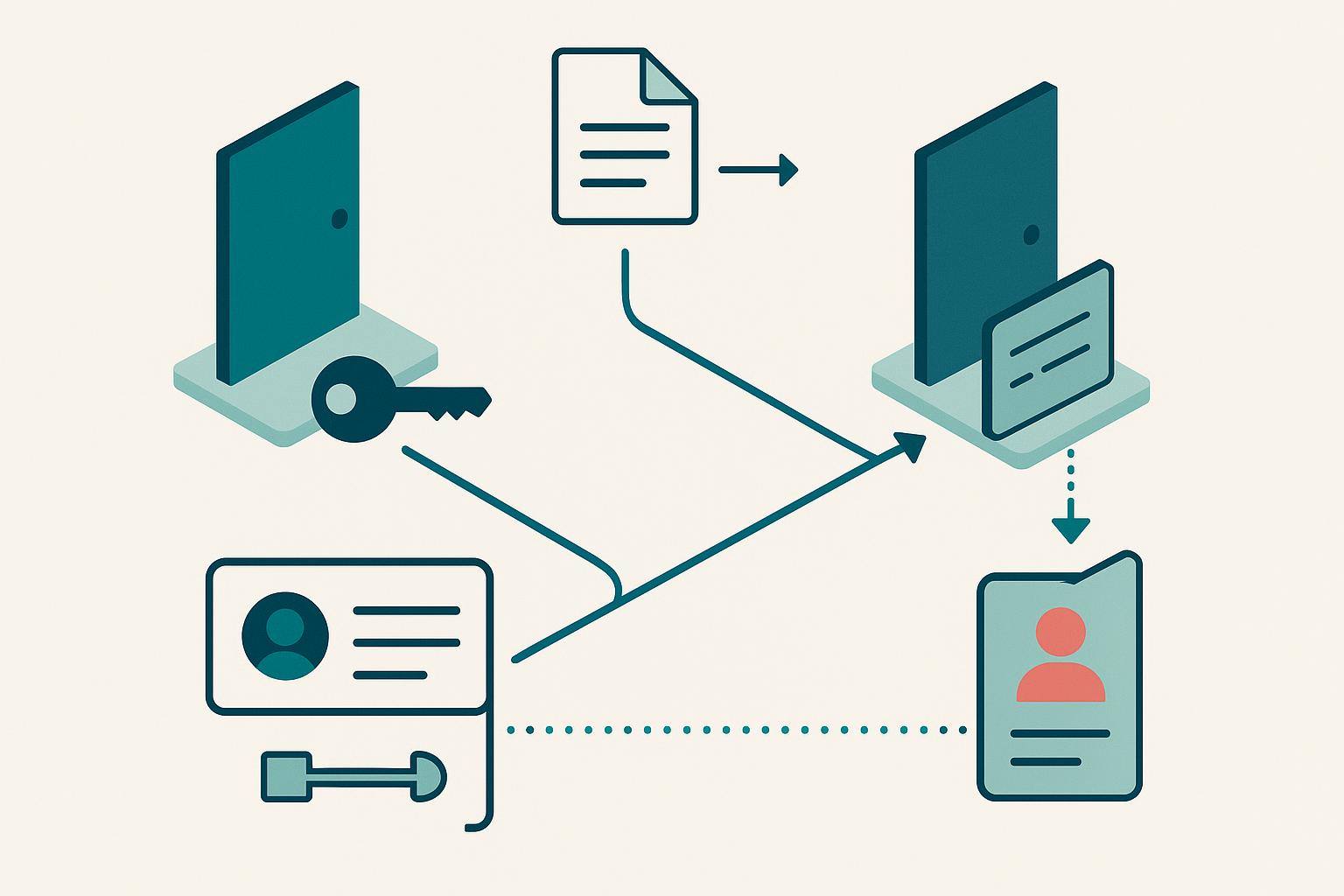
The client never signs in. Their link identifies them, so there is no login, no password, no "create an account to view your packet". Open it on a second phone, come back three months later — it just opens. Gating a client out of their own welcome packet to harvest an email address is a bad trade.
Meaningful moments land in the CRM. When the client opens a document, follows a link, plays with the payment math, or shares the packet, a short note goes onto their Follow Up Boss timeline and a last-engagement field refreshes. A payment run also records the budget shape they were exploring, which is the most useful thing a buyer packet produces.
Two restraints there, both deliberate. Plain page views do not create notes — a client checking their own packet twice a day would bury their timeline in a week. And repeat events of one kind are throttled to at most one an hour, so an enthusiastic evening on the calculator produces two or three notes, not forty.
The hand-off is built in. The packet carries a share card that produces a different link. Someone arriving on that link is not your client, so they see a short introduction card — name, a way to reach them, an explicit consent tick — and become a new lead in Follow Up Boss with the source recorded as a Client Packet referral. Your client gets a note naming who came in through them; the new person gets one naming whose introduction they arrived on. Client Packets never message that referral for you: the capture writes the lead and the two notes, then stops. What happens next is whatever you have already set up: your Follow Up Boss action plans and lead flow, and any Ace Automations rules you run on top of them, will treat it like any other new lead — and some of those can send without asking you first. Check what your own rules do with a fresh contact before you start sharing packets.
Because that referral is tagged and carries a recorded source, it is reportable — you can list them like any other segment, the same trick behind Ace Smart Lists.
The limits, stated plainly
- Paid feature, and the ceiling is per account. Free Ace accounts cannot create packets at all. An account on Regular seats gets five active packets in total; one Pro seat, or Ace Trove, lifts the whole account to fifty. On a ten-agent team the first number is tighter than it sounds. See pricing.
- Write-back depends on a match. Engagement only reaches Follow Up Boss when the email or phone on the packet matches a contact already in your CRM. Typo it and the packet still works perfectly for the client, and tells you nothing.
- An unattributed open stays unattributed. If the client forwards their own link, we do not guess who is on the other end. The page opens; no name is attached.
- We have no results to show you yet. The feature is two days old at the time of writing — no adoption numbers, no lift figures, no case studies. We would rather say so than invent a percentage.
- A packet does not create referrals. It removes the friction from one that was already possible. The relationship does the work.
Build one in twenty minutes
- Pick the type. Buyer or seller — the road-ahead steps and tool cards differ.
- Name the client properly. Use the exact email or phone you have in Follow Up Boss — that is what connects the packet to their record.
- Write two sentences, not ten. A short personal note beats a page of onboarding prose.
- Attach the three documents you re-attach to every deal. Not eleven.
- Add one tool. Payment math for buyers, equity and pricing context for sellers.
- Rewrite the road-ahead steps in your own vocabulary for each stage.
- Send it as a text. It is a link. Texts get opened.
The send message matters more than the build:
Buyer, at signing: "Hey Dana — everything we went through today is in one place: [link]. The payment tool at the top is the real one, so plug in whatever number you want. Save it to your home screen; I'll keep it current as we go."
Seller, at listing: "Hi Mark — here's your seller page: [link]. Pricing context, the prep list, the disclosure pack, and where we are. I'll update it as we move, so this link is always current."
Thirty days later, the ask: "By the way — there's a share button at the bottom of your page. If anyone you know starts asking the questions you were asking in March, that's the easiest way to send them to me."
Send the third one once. If you have never asked, it will feel enormous; it is not. Our SMS templates for lead follow-up cover the surrounding cadence.
Who should get one
Not everyone — a packet per active client is the point, and the account ceiling rules out anything broader. Start with everyone under contract, then sellers you are about to list; if you have segmented your database by lead type, that already tells you who qualifies. Add one more group deliberately: past clients drifting back toward listing, which Seller Radar scores nightly.
Common questions
What is a real estate client welcome packet?
A single document — increasingly a page rather than a PDF — that a buyer or seller receives when they start working with you. It sets expectations, lays out the process, holds the documents and tools they will need, and gives them one place to look instead of scrolling back through texts.
Should a welcome packet be a PDF or a web page?
A PDF is fine for something read once and discarded. A welcome packet is read repeatedly over weeks and its contents change during that time, which argues for a hosted page you can edit after sending. The other difference is that a page can tell you it was opened.
Does the client have to sign in to see their packet?
In Client Packets, no. The client's link identifies them, so the page opens with no account and no form. The short introduction card appears only for someone arriving on a share link the client passed on, and even that asks for consent rather than assuming it.
Is a welcome packet worth it for a small book of business?
Under about ten active clients, a well-written email may do the same job. The economics change when you can no longer hold every client's context in your head.
Try Follow Up Ace in your Follow Up Boss
Free to start, no sales call. Connect Follow Up Boss in one click and Ace works inside your CRM.
Get Started Free