Introducing Seller Radar: the sellers hiding in your database, found every night
Predictive seller analytics for the database you already own — scored nightly, with the evidence behind every name.

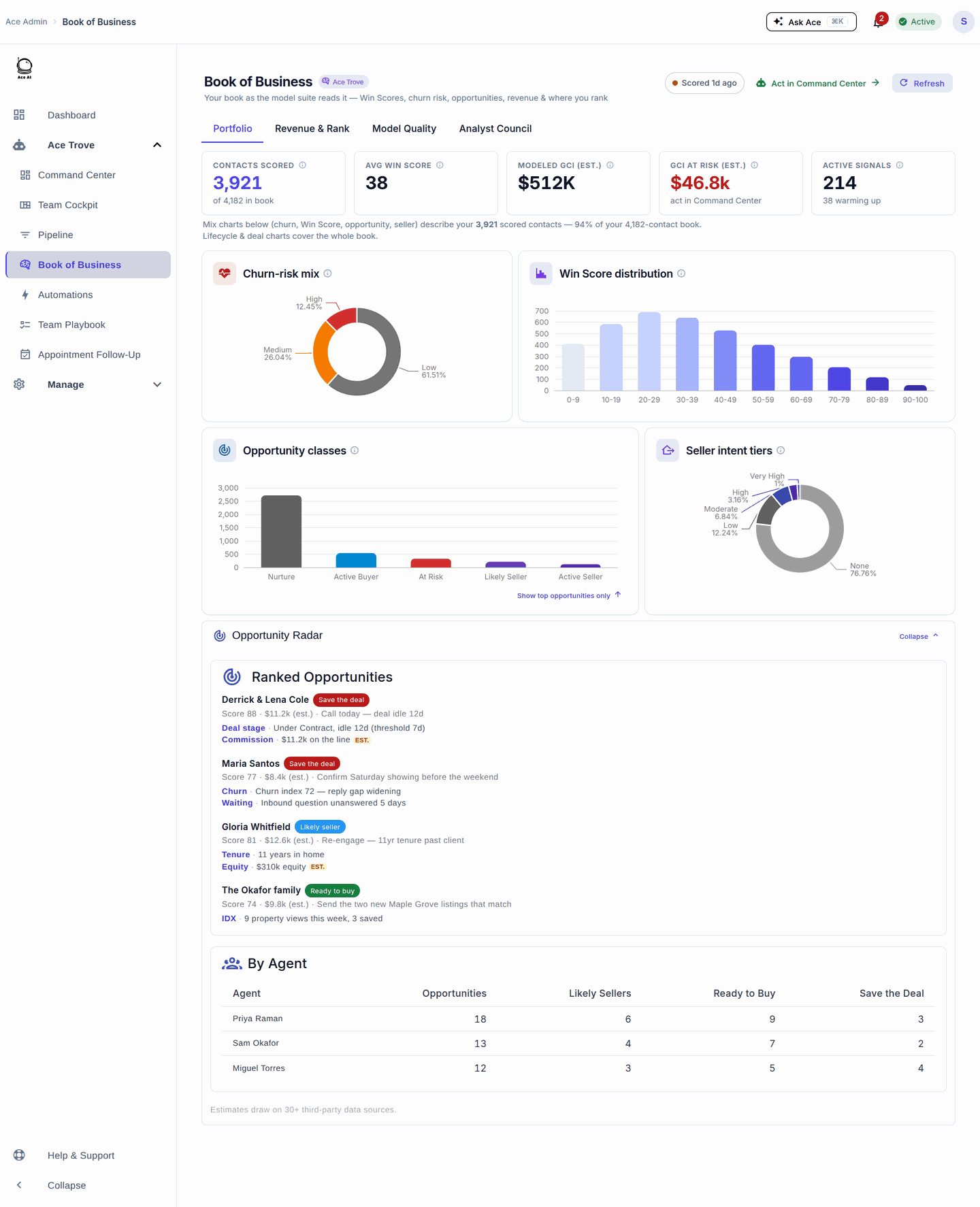
Predictive seller analytics is the practice of scoring which homeowners in an agent's database are most likely to list soon, using property, market, and behavioral signals. Seller Radar is a Follow Up Boss add-on that does this every night — scoring each contact 0–100 from 30+ third-party data sources plus your own CRM activity, showing the evidence behind each score, and drafting a reactivation touch for you to review.
Seller Radar comes with Ace Trove — turn Trove on and your whole database gets scanned every night, for every agent on the account. It runs inside the Follow Up Boss you already use — no second platform, no separate login, and no separate data subscription on top. Your next listing is probably already a contact in your CRM. Seller Radar's job is to find it before another agent does.
Most agents are sitting on hundreds of quiet past clients and sphere contacts. Some of them will sell this year. Until now, the only way to find out was to call all of them, or to pay a separate platform to score them. Seller Radar takes a different path: it reads the database you already maintain, enriches each home from public records and market data, and ranks the contacts most likely to move — then tells you why.
How does Seller Radar find likely sellers in your database?
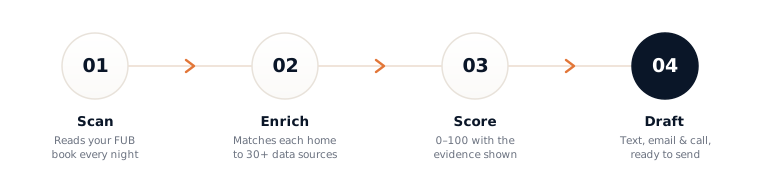
Seller Radar runs a nightly, account-wide scan of your Follow Up Boss contacts and focuses on the quiet ones — past clients and sphere who haven't engaged recently. It matches each home address against 30+ third-party data sources, scores propensity to sell on a 0–100 scale, and surfaces the highest-intent homeowners with a drafted reactivation touch. It works in four steps:
- Scan. A nightly job reads your FUB contacts and prioritizes the dormant ones — the database you've stopped working.
- Enrich. Each contact's home address is matched against 30+ third-party data sources covering property records, ownership history, home-value trends, and area risk.
- Score. A propensity-to-sell score is built from five signals, and the reasoning is shown to you — not hidden behind a black box.
- Draft. For your top likely sellers, Ace's suggestion engine writes ready-to-send drafts — a text, an email, and a call script — and delivers them as a Follow Up Boss note and task for you to review and send.
What signals predict that a homeowner is likely to sell?
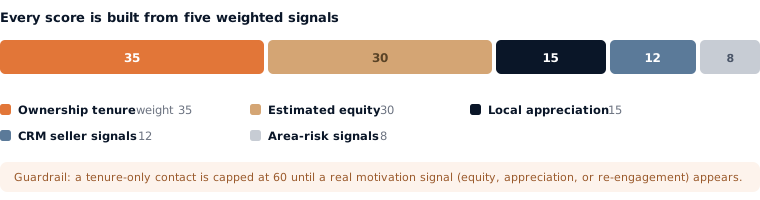
Seller Radar's score is built from five signals, weighted by how strongly each one predicts a sale. The biggest drivers are how long someone has owned their home and how much equity they've likely built — the two conditions that make selling possible and attractive. The five signals:
- Ownership tenure — years since the last recorded sale. The dominant driver; the longer someone has owned, the closer they statistically are to moving.
- Estimated home equity (est.) — modeled from purchase price, tenure, local appreciation, and a conservative mortgage assumption. Equity is what turns "could sell" into "wants to sell."
- Local price appreciation — tract-level home-price movement in the contact's micro-market, so a hot local market lifts the score.
- Area-risk signals — local mortgage-delinquency pressure, flood-zone and natural-disaster risk, and wildfire hazard — conditions that nudge owners to move.
- CRM seller signals — seller, listing, valuation, downsizing, or relocation tags on the contact, move signals you've already noted in your own FUB notes (a relocation, a downsizing conversation), plus recent re-engagement in your CRM. This is the input no outside tool can see — and it comes only from your own first-party records.
The 30+ third-party data sources behind each score
Each home is enriched from 30+ third-party data sources, with parcel coverage across 25+ states — no proprietary lien data and no per-lead fees. The kinds of data they gather:
- Property & ownership records — parcel details, last recorded sale, year built, and how long the current owner has held the home.
- Home-value & equity inputs — purchase price and local price appreciation, used to model estimated equity.
- Neighborhood market context — tract-level price trends and ownership mix.
- Environmental & area-risk data — flood-zone, wildfire, and seismic risk, plus natural-disaster history.
- Financial-pressure indicators — local mortgage-delinquency levels.
- Geospatial resolution — matching each address to its precise parcel and neighborhood.
How is the seller score calculated?
Seller Radar produces a 0–100 propensity score and sorts each contact into a tier — Very High (75+), High (50+), Moderate (25+), or Low. The score is transparent: every contact ships with an evidence list showing the exact factors behind it, so you can trust the rank instead of guessing. Two design choices keep it honest:
- No motivation, no top tier. A contact who has simply owned a long time — but shows no equity, appreciation, or recent re-engagement — is capped at a score of 60. Tenure alone can't manufacture a "Very High" seller.
- No guessing on equity. Equity is always labeled "(est.)" and modeled conservatively. In states that don't disclose sale prices, Seller Radar leaves it blank rather than inventing a number.
That show-your-work discipline runs across all of Ace Trove's intelligence, not just Seller Radar: the predictive model suite behind the Win Score, Churn Risk, and appointment propensity publishes its own held-out evaluation numbers — with an honest explainer of what they do and don't mean — in the model evaluation report.
What happens when Seller Radar flags a likely seller?
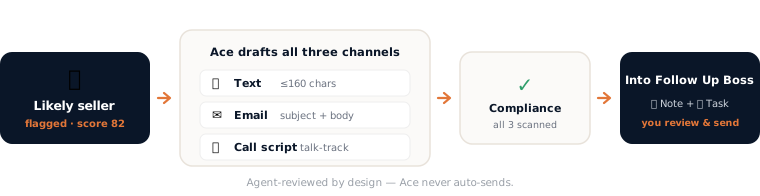
A score on its own isn't an action. When Seller Radar flags a contact, it hands them to Ace's suggestion engine, which decides the next move and writes it for you — then delivers it right inside Follow Up Boss. For each flagged seller, Ace:
- Drafts all three channels — a ready-to-send text, a subject-and-body email, and a phone/voicemail call script, written in your voice and addressed to the contact by name. Ace recommends which channel to lead with.
- Runs a compliance check — every draft (text, email, and call script) is scanned for Fair Housing and steering issues before you ever see it.
- Drops a note in Follow Up Boss — the "why" behind the flag plus all three copy-ready drafts, written to the contact's timeline.
- Adds a task — a short, prioritized to-do on the contact so the outreach doesn't slip, and it surfaces in your daily queue.
Then you decide: pick a channel, edit if you want, and send. Ace never sends on its own — every touch is agent-reviewed by design.
Where does Seller Radar show up?
Seller Radar lives in the tools you already use, in three places:
- The Seller Radar dashboard — your likely sellers ranked by score, with estimated equity and the evidence behind each one. Comes with Ace Trove: your own book plus the account-wide view.
- Your Follow Up Boss contact records — the Ace Seller Tier is written to a Follow Up Boss field, rolling nightly, so you can sort, filter, and build FUB smart lists on your likely sellers right inside the CRM. The 0–100 score and the evidence behind it live in Seller Radar.
- Your suggestion queue — for your top sellers, the three drafts (text, email, call script) and a follow-up task land here and in Follow Up Boss. You pick a channel and send; Ace never auto-sends.
- Ace, on any surface — ask Ace to look up a property or a contact's seller intent from chat or voice. Two tools,
ace_lookup_propertyandace_contact_seller_intent, put the same intelligence in the conversation.
And it closes the loop. When a contact you flagged actually lists or sells — detected from a new recorded sale on their parcel — Seller Radar fires a critical alert and drafts a "next chapter" outreach, so you're the first call for their next move, too.
Seller Radar vs. Fello vs. Revaluate
All three help you find likely sellers in a database you already have. The difference is where they run and what they're built around. Seller Radar is a layer inside Follow Up Boss that scores contacts transparently and uses your own CRM activity; Fello is a destination platform that adds home-value landing pages and automated outreach; Revaluate specializes in life-event mover signals. Here's an honest side-by-side:
| Seller Radar | Fello | Revaluate | |
|---|---|---|---|
| Where it runs | Inside Follow Up Boss | Separate platform | Separate platform |
| Finds likely sellers in your DB | Yes | Yes | Yes |
| Uses your own CRM activity | Yes | Limited | No |
| Shows evidence behind each score | Yes | Partial | Score + tags |
| Life-event signals (divorce, probate) | First-party only — from your own CRM notes | Limited | Yes — core strength |
| Home-value landing pages | No | Yes — core strength | Add-on |
| Outreach | Agent-reviewed drafts | Automated email + postcard | Bring your own / AVM add-on |
| Pricing | Included with Ace Trove | Subscription (see fello.ai) | Subscription (see revaluate.com) |
No fabricated stats, no straw-manning. Competitor features are sourced from their public product documentation; "limited" means not publicly documented as a first-class capability. Seller Radar claims are verified against production code. Fello and Revaluate are strong tools — if you want hosted home-value pages and hands-off automation, Fello is a great fit; if life-event triggers are your priority, Revaluate specializes there.
What Seller Radar doesn't do (the honest scope)
We'd rather mark the limits than let you find them later. Everything Seller Radar shows is traceable to a signal you can see — and here's what it deliberately doesn't claim:
- Equity is estimated, not observed. It's modeled from public records and labeled "(est.)" — not lien-level or appraisal-grade.
- No third-party life-event data. Seller Radar never buys, mines, or appends divorce filings, probate records, or job-loss lists. It does surface move signals you've already noted in your own CRM — a relocation or downsizing note the agent wrote counts toward the score — but if purchased life-event triggers are central to your strategy, a life-event tool is a better fit.
- It never auto-sends. Every reactivation touch is agent-reviewed before it goes out.
- Coverage is 25+ states today. County parcel coverage is expanding; some states don't disclose sale prices, which limits the equity estimate there.
Frequently asked questions
How do you know if someone is going to sell their house?
You look for the conditions that precede a sale: long ownership tenure, meaningful built-up equity, rising local prices, area pressures like flood or delinquency risk, and recent re-engagement signals in your CRM. No single factor is decisive, but together they rank who is closest to listing. Seller Radar combines all of them into one transparent 0–100 score per contact.
What is database reactivation for real estate agents?
Database reactivation is the practice of re-engaging past clients and dormant sphere contacts already in your CRM, rather than buying new leads. It's the cheapest source of listings most agents have — and the most neglected. Seller Radar makes it systematic: it scores your quiet contacts nightly and hands you the few most likely to sell, with a drafted message ready to review.
Does Follow Up Boss have a seller prediction feature?
Follow Up Boss doesn't predict sellers natively, but Follow Up Ace adds it as an add-on. Seller Radar installs into your existing Follow Up Boss account, scores your contacts for seller propensity nightly, and surfaces the results inside the CRM — no export, no second login, and no separate data subscription.
What's the best Fello alternative for Follow Up Boss agents?
If you want seller intelligence without standing up a second platform, Seller Radar is the natural Fello alternative for Follow Up Boss users: it runs inside FUB, scores your contacts transparently, factors in your own CRM activity, writes the Seller Tier to a Follow Up Boss field nightly (the 0–100 score and evidence live in Seller Radar), and comes with Ace Trove. Fello remains the stronger choice if your priority is hosted home-value landing pages and fully automated postcard outreach.

Find this month's listing in the database you already have
Seller Radar comes with Ace Trove and works inside your Follow Up Boss. Free to start, no sales call — connect Follow Up Boss in one click and let Ace surface the sellers hiding in your database.
Get Started Free